Home > Health > Metabolism
Researcher Warns: That 3 PM Crash Isn't "Just Getting Older." It's a Locked Door Inside Your Cells (And The Cinnamon In Your Kitchen Could Be Making It Worse)
Why you feel exhausted right after eating, why cravings own you by afternoon, and why "eat less, move more" keeps failing everyone over 40


Answer this honestly.
About an hour after lunch, do you feel like someone pulled the plug?
Heavy eyelids. Foggy head. A sudden, almost violent need for something sweet or another coffee.
Then dinner comes, you eat "normally"… and the scale still creeps up. Especially around your belly.
If that's you, I need you to hear this: it is not a willpower problem.
It's a door problem. And once you understand it, you'll never look at your afternoons — or your spice rack — the same way again.
I Blamed Myself for Six Years
My name is Linda. I'm 52. Two kids, a full-time job, and for six years, a body I didn't recognize.
I wasn't eating junk. Oatmeal in the morning. Salads at lunch. I walked every evening.
And still: crashing at 3 PM like clockwork. Raiding the pantry at 9 PM. Waking up tired. Twenty-two pounds that showed up after 45 and refused to leave.
I tried keto. Intermittent fasting. A $300 "metabolism reset" program. I even started sprinkling supermarket cinnamon on everything because I read it "helps blood sugar."
Nothing changed. Except my guilt.
Then my sister-in-law introduced me to someone at a family dinner. A man who has spent 27 years studying one thing: what happens to sugar after it enters your blood.
The Researcher Who Changed How I See My Body

Dr. Michael Harlan, PhD, is a metabolic researcher who has spent nearly three decades studying insulin signaling and plant compounds that influence it.
I told him what I tell everyone: "I eat well, I move, and I'm still exhausted and gaining."
He didn't look surprised. He looked tired of hearing it.
"Linda, your problem isn't how much sugar you eat. It's where that sugar goes after you eat it. In most people over 40, it can't get inside the cell. It's knocking on a door that's slowly rusting shut."
→ See the formula Dr. Harlan's research points toThe "Locked Cell" Problem Nobody Explains
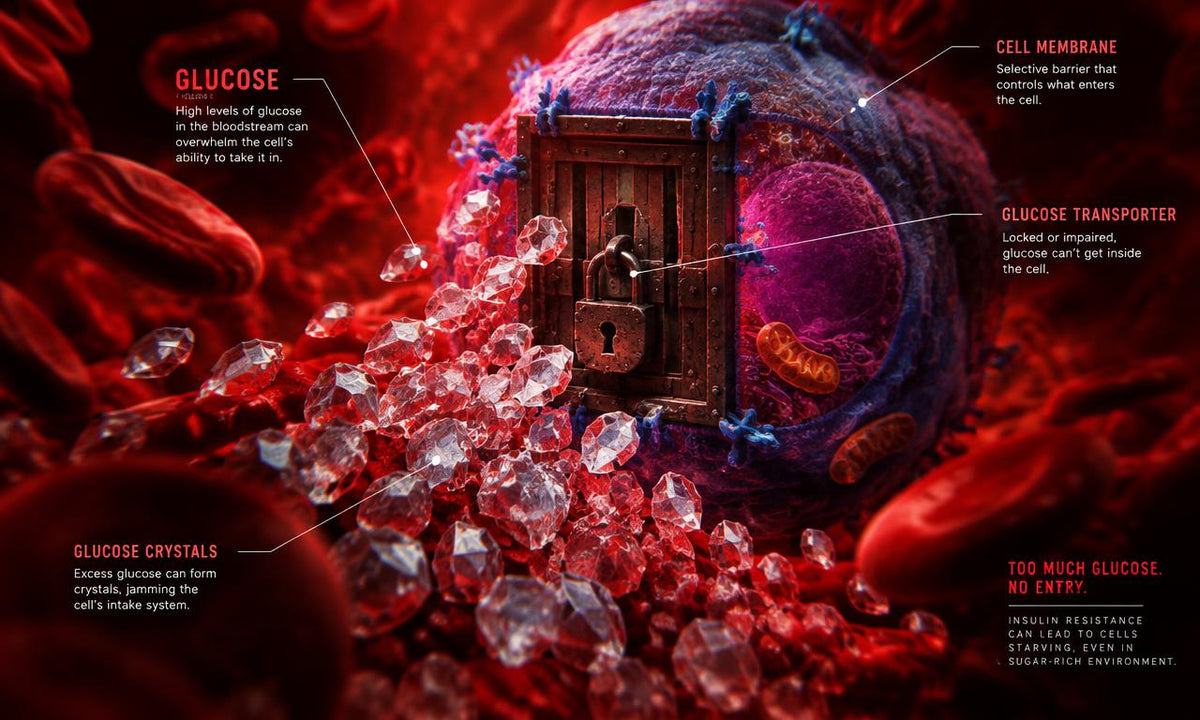
He explained it simply. And it's the most important thing I've ever learned about my body.
Every time you eat, your food becomes glucose — fuel. Insulin is the key that unlocks your cells so that fuel can get in and become energy.
But with age, stress, poor sleep and modern carb-heavy meals, the lock gets stiff. Researchers call it declining insulin sensitivity. Studies suggest a large share of adults have some degree of it — and most have no idea.
Here's what that does to you, every single day:
❌ Sugar is stuck outside the cell. Your cells are literally starving for fuel while your blood is full of it. That's the 3 PM crash.
❌ Your brain panics and screams for more sugar. That's the cravings you "can't control."
❌ Your pancreas pumps out even more insulin to force the door open. And high insulin is the hormone that tells your body to store fat — especially around your belly.
"So you end up tired AND gaining," he said. "Starving cells in an overfed body. And people blame themselves."
Eating less doesn't fix a locked door. It just leaves you hungrier.
The Cinnamon Scam Hiding In Your Kitchen
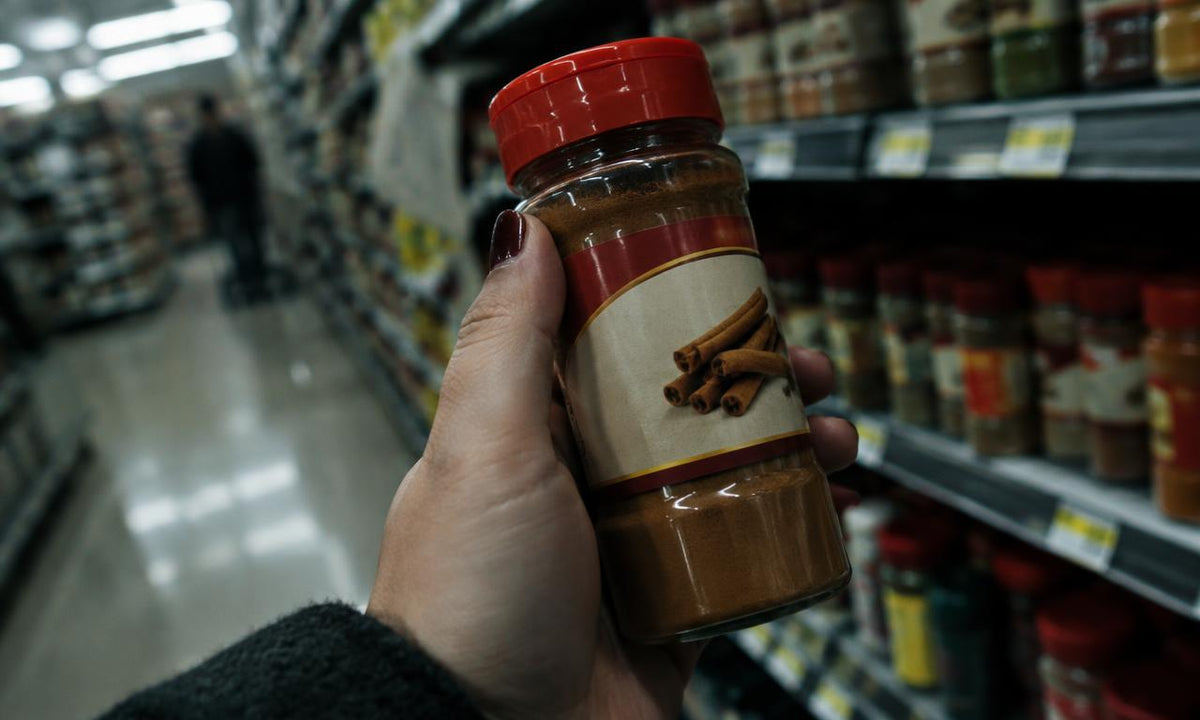
Then I told him about my cinnamon. He winced.
"Go check the jar. I promise it doesn't say which cinnamon it is."
He was right. It just said "Ground Cinnamon."
Here's what I learned: almost all cinnamon sold in grocery stores in North America is not true cinnamon. It's cassia — a cheaper, harder cousin from China and Indonesia.
And cassia carries a compound called coumarin. Cassia can contain up to ~1% coumarin. True Ceylon cinnamon? Roughly 250x less — often around 0.004%.
Why does that matter? European food-safety authorities set a tolerable daily coumarin intake of about 0.1 mg per kg of body weight, because high amounts have been linked to liver stress in sensitive people. German regulators have warned that just one teaspoon of cassia a day can push a smaller adult over that limit.
"So the people trying hardest — sprinkling a spoonful on everything every day — are often the ones getting the most coumarin," he said.

And even if you used true Ceylon from a jar? A spice jar isn't a dose. The active compounds studied in research come from concentrated, standardized extracts — not a dusting on your latte.
→ See the true Ceylon formula (not cassia)The Two Keys That Help Unlock The Door
Dr. Harlan then showed me why he doesn't recommend cinnamon alone. His research focuses on supporting the cell door from two different sides at once.
Key #1: True Ceylon Cinnamon (Cinnamomum verum)
Ceylon bark contains polyphenols — including type-A procyanidins — that researchers have described as "insulin-mimetic." Lab studies show they may help the insulin receptor respond and encourage GLUT4, the cell's sugar "gate," to move to the surface. In plain words:it helps oil the stiff lock.*
Cinnamon has also been studied for slowing how fast food empties from the stomach, which may soften the post-meal sugar spike.*
Key #2: Berberine HCl — the "Burn-or-Store" Switch
Berberine, from barberry and goldthread, has been used for centuries. Modern research shows it activates AMPK — an enzyme often called your cells' master metabolic switch. AMPK can help move GLUT4 gates to the cell surface through a separate route that doesn't depend only on insulin.*
Berberine is one of the most clinically researched botanicals for healthy glucose metabolism, with dozens of human trials and multiple meta-analyses.*
"One key oils the lock. The other opens a second door," he said. "Two pathways. That's why single-ingredient cinnamon pills underwhelm people."
The Formula Built On This Research

I asked him the question you're probably asking: "So what do I actually take?"
He recommended Resilia® Ceylon Cinnamon + Berberine — a formula built around exactly this dual-pathway research.
✅ 1,000mg True Ceylon Extract — real Cinnamomum verum, never cassia. Standardized to cinnamaldehyde and polyphenols.
✅ 500mg Berberine HCl — the most studied form, for the AMPK pathway.
✅ Standardized extract, not powder — a real dose, not a sprinkle.
✅ Nothing else. No proprietary blends, no fillers. Just the vegetable capsule.
✅ Two capsules a day, with a meal. That's it.
My First 30 Days

Week 1: Honestly? I didn't expect anything. But on day 5 I realized it was 4 PM and I hadn't gone hunting for chocolate. I hadn't even thought about it.
Week 2: The lunch coma got lighter. I was finishing work without the third coffee.
Week 3: My evening "pantry visits" basically stopped. Not because I was fighting them. They just… weren't there.
Day 30: My jeans buttoned easier. My daughter asked me to go on a walk with her — and I said yes instead of "I'm too tired, honey." I felt steady. Like myself again.
Individual experiences vary.
→ Try it yourself with today's bundle offerYour daily routine. A longer-term view.
What Could Change After You Start the Formula?
Not a quick fix. Not another afternoon pick-me-up. From your first week to a longer-term routine, here's a more realistic way to think about trying Resilia Ceylon Cinnamon + Berberine — and what to pay attention to along the way.
A guide, not a promise: These are check-in points, not clinically established milestones for this finished formula. Experiences vary, and benefits aren't guaranteed on any schedule.
-
1 WEEK
Start With Consistency, Not a Sudden Jolt
This isn't a stimulant. You shouldn't expect a caffeine-like rush or an overnight transformation. Your first step is a simple daily routine: follow the label directions, take it with a meal, and notice how you feel.
What to watch for: Pay attention to how you tolerate the formula, your energy after lunch, and when you find yourself reaching for a snack. A quick daily note gives you a starting point to compare against later.
-
1 MONTH
Look for Patterns in Your Afternoons
Steadier energy after meals and less reaching for snacks are the kinds of experiences some users describe. If you notice a change, it may feel subtle — an afternoon that feels more manageable, rather than a dramatic burst of energy.
What to watch for: Compare similar days: the same lunch, a similar night's sleep, and your usual activity. Look for a repeating pattern, not one unusually good day. You may not notice a difference in this window.
-
2 MONTHS
Give the Bigger Picture Time to Emerge
Ceylon cinnamon and berberine are included to support healthy glucose metabolism — not to mask tiredness with a stimulant. Keep meals, movement, and sleep in the picture; a supplement doesn't replace any of them.
What to watch for: Review your notes on post-meal energy and appetite. If you're tracking blood sugar with a clinician, use their recommended measurements and schedule. How energetic you feel cannot tell you whether your glucose has improved.
-
3 MONTHS
Take Stock of What Has Actually Changed
By this point, you've had time to review your routine and any changes you've noticed. The useful question isn't whether you feel completely transformed. It's whether there is a consistent, meaningful difference for you.
What to watch for: Discuss any monitored results with your clinician and reassess whether the formula belongs in your routine. No change is also possible. Don't increase the dose or replace prescribed treatment to chase a result.
-
6 MONTHS
Keep the Support. Keep the Healthy Habits.
The aim is a sustainable routine alongside balanced meals, regular movement, and enough sleep. Continuing for longer doesn't automatically mean stronger results, and there isn't evidence that this formula's effects deepen at a specific month.
What to watch for: Check whether any early changes have held up over time. Review the supplement with your clinician, particularly if your medicines or health have changed. Ongoing use should be a considered choice, not an assumption.
-
12 MONTHS
A Routine Worth Reviewing — Not a Finish Line
A year is a chance to look at your metabolic wellness as a whole. If the formula still suits you, it can remain one part of your routine — but it isn't a guarantee of fewer cravings, weight loss, or protection from diabetes.
What to watch for: Review your overall health, any clinician-monitored results, and whether continued use is appropriate. Long-term safety and benefits of this exact combination aren't established by the product page's timeline.
Check with your clinician before starting, especially if you take medication for blood sugar. Berberine can interact with medicines. Persistent fatigue, excessive thirst, or frequent urination deserve medical attention, not just a supplement. Do not use if pregnant or nursing.
What Others Are Saying
Two Paths From Here
Path 1: Close this page. Keep fighting the 3 PM crash with coffee. Keep blaming yourself for cravings. Keep sprinkling cassia and hoping.
Path 2: Give your cells the two keys they've been missing — and see how different your afternoons can feel.
Yes, I Want Steady Energy →*These statements have not been evaluated by the Food and Drug Administration. This product is not intended to diagnose, treat, cure, or prevent any disease. Berberine may interact with prescription medications, including those for blood sugar — consult your doctor before use, and do not use if pregnant or nursing. This is an advertisement. Story and individuals are illustrative; results vary.